Our Attorneys Identify
Your Best Solution to
Eliminate Your Debt…
Then Go to Work to
Make It Happen!
Your Best Solution to
Eliminate Your Debt…
Then Go to Work to
Make It Happen!

Because there can be many paths to resolving overwhelming debt and collection lawsuits, people often make costly mistakes by pursuing the wrong one.
For example, a firm that only handles Bankruptcies, may ‘sell you’ on filing bankruptcy because that’s the option that’s best for them… similarly, a debt relief company may lead you down the single path they offer because it’s best for them.
Instead, the Debt Solution Attorneys at DiMarco Warshaw, A Professional Law Corporationhandle a broad range of debt solutions, so we can provide unbiased legal advice, and put together the most effective plan for you!
Call us for immediate help, or book an appointment online.
Click here to learn What To Expect On Your Phone Consultation
Whether your solution is Bankruptcy, Debt Negotiation and Settlement, Loan Modification, or Foreclosure Prevention, our Attorneys will go to work to get your debt eliminated.
We’ll email our Agreement via DocuSign, and be available to answer any questions, so we can get to work for you!
If you need a fresh start our attorneys identify your best path, and then go to work to get you there!
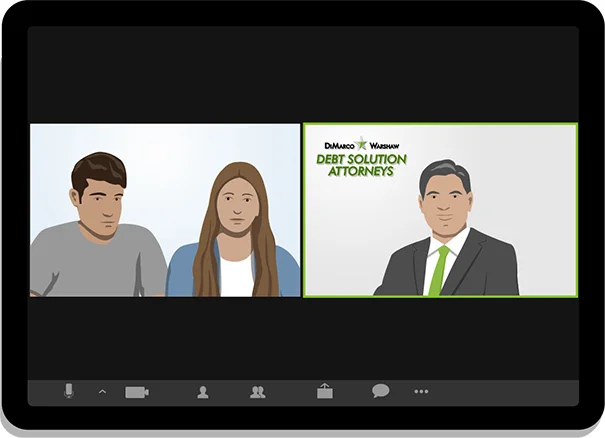
The best way to get out of debt depends on your specific circumstances. The fact is that there are multiple ways to handle overwhelming debt and collection company lawsuits. This can be confusing, and, unfortunately, consumers too often contact the wrong company and are “sold” the wrong service for their particular situation. DiMarco Warshaw, A Professional Law Corporation handle both bankruptcy and debt settlement, among other debt solutions. Our experience in these areas affords our clients an unbiased perspective, and helps us create a custom plan of action that makes the most sense for you.